Wanderlust
Emigrating to Canada 1968 - Adventure with 1200 Francs
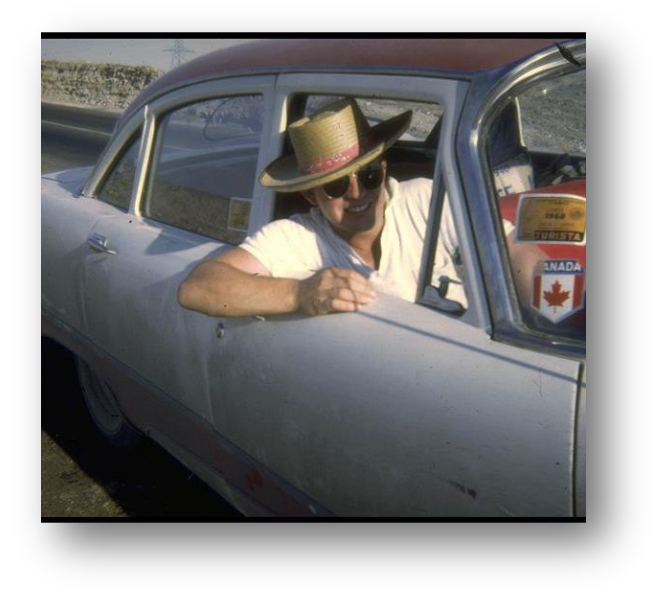
On April 1, 1968, two young Swiss masons took a courageous leap into the unknown: With 1200 francs each in their pockets and big dreams in their luggage, they started their Canadian adventure. What began as a boastful promise to emigrate became a story of perseverance, unexpected humanity, and the struggle for survival in the new world. Hans Bieri tells of this moving chapter of his life in his autobiography «Ruf vom Himmel» (Call from Heaven).
The Tearful Farewell
The sun radiated generous warmth on that April 1, 1968, onto the slowly greening meadows. But no one was laughing anymore on this farewell day - instead, the mothers shed all the more tears.
With packed suitcases and 1200 francs each, the two young men took the train to Kloten. Shortly after, they sat in a Canadian DC8 at 32,000 feet altitude, heading for Montreal. The uncertainty was great: Who knows if they would ever see each other again?
No Job - the harsh reality in Montreal and Toronto
Montreal welcomed them with big-city flair, but also with almost unbearable car exhaust. Staying overnight in a cheap lodging, they had to carefully ration their money - there wasn't much of it.
Disillusionment came quickly: Their masonry training was not recognized. At the employment office, they only heard "No Job, no work." Even Hans' fluent French skills helped little against the gibberish of Canadian French.
Toronto brought no change either. With the Canadian Pacific Railway, they continued westward through the stone-hard frozen winter landscape. Hope dwindled with every kilometer.
How do you survive with the last 80 dollars?
Arriving in Winnipeg, the situation was critical: Only 80 dollars per person left. The plan was desperate but clear - if no work, then they would buy a hunting rifle and live like a hundred years ago in a self-built hut in the north.
Fate had other plans. Half an hour before Winnipeg, they found a newspaper on the train floor. They had almost given up when they discovered the saving advertisement: "We are looking for laborers for our plastering business in construction."
The breakthrough with the three Polish grandmas
Mr. Wagner, the German employer, hired them. The work was hard - carrying plaster to the sixth floor all day. But they were used to it and had strength like bulls. The good wages compensated: With a dollar exchange rate of 4.25, they earned double or more than Swiss masons.
At 563 Victor St. they found shelter with three old sisters from Poland who had fled to Canada during the war. These loving "old ladies" cared touchingly for the two young Swiss: "Boys, you have to go to Church," they admonished weekly.
An Indian also worked with them - a good colleague, but every weekend he disappeared for days until he had drunk away his wages. The encounter with the sad reality of the indigenous people, who burned their government-built wooden houses board by board, deeply shook Hans Bieri.
Quick Questions
How much money did one need in 1968 to emigrate to Canada? Hans Bieri and his colleague started for Canada in 1968 with 1200 Swiss francs each. Shortly before Winnipeg, only 80 dollars per person remained - so the money was very tightly calculated for emigration without a job guarantee.
Were Swiss craftsman qualifications recognized in Canada? No, the masonry training was not recognized in Canada in 1968. Hans Bieri and his colleague had to work as unskilled laborers, but still earned double or more than Swiss masons, since the Canadian dollar then stood at 4.25 francs.
What began as a youthful dream with 1200 francs became a lesson about perseverance and the kindness of strangers in a foreign land.